Originally published on Good Omens by Avery Loftis
Simple, lilting chords dote on the introductory track to the Harlem-born artist, Naomi Yanos’ very first album, “Into the Icebox.” The tone feels sweet until about 40 seconds in. Counterpoint minor chords, a thrumming guitar and drum beat, and the lyrics “Roadkill with my bedroom eyes/ I know what it’s like to be dead inside,” offer two sides to the artist on the song “Discoball Dress”.
Yanos said that part of what “Into the Icebox” means to her is reaching into those vulnerable parts of herself. The shiny, vibrant outside with a cold, sometimes sloshy inside.
“I was definitely a wild child teenager,” Yanos said.
And she suggested it might be better not to elaborate on just how wild.
Featuring ad libs inspired by funkadelic sounds and introductions inspired by James Brown style proto-rap, from the grungy guitars on “THINKING AHEAD” to a country twang on the “2021 Italian Cordano”, American Idol is rooted in the 1970s. Zay pointed to his first iPod, a hand-me-down from his father, when I asked about these varied influences. “It was all the music he listened to,” he smiled as he reminisced on the R&B and reggae tracks sprinkled with the occasional Led Zeppelin that dominated his younger years. “A lot of these sensibilities carry through to the music I make now.”

Photo by @xay_photography (via Instagram).
For high school, Naomi Yanos attended Dalton Preparatory School on Manhattan’s Upper East Side. Here, she said she would skip out on class a lot to hang out in the art and music rooms, messing around with her friends. Her song “Underwear” is based on moments like these that she shared with her high school friends. Some of her favorite lyrics at the moment are in the second verse.
“I never felt more in my body/ You know how hard that is for me/ You’re passed out in a pile of laundry/ I’m inside a seashell at the beach, and every overdose is just sand falling through...” On the song, Yanos belts out these lyrics over a flurry of reverb and periodic thrums of the piano, like the striking of a clock, or sand through an hourglass. “Underwear,” as the third track on the album, continues a ritualistic, near transcendental tonal thread that runs through “Into the Icebox.”
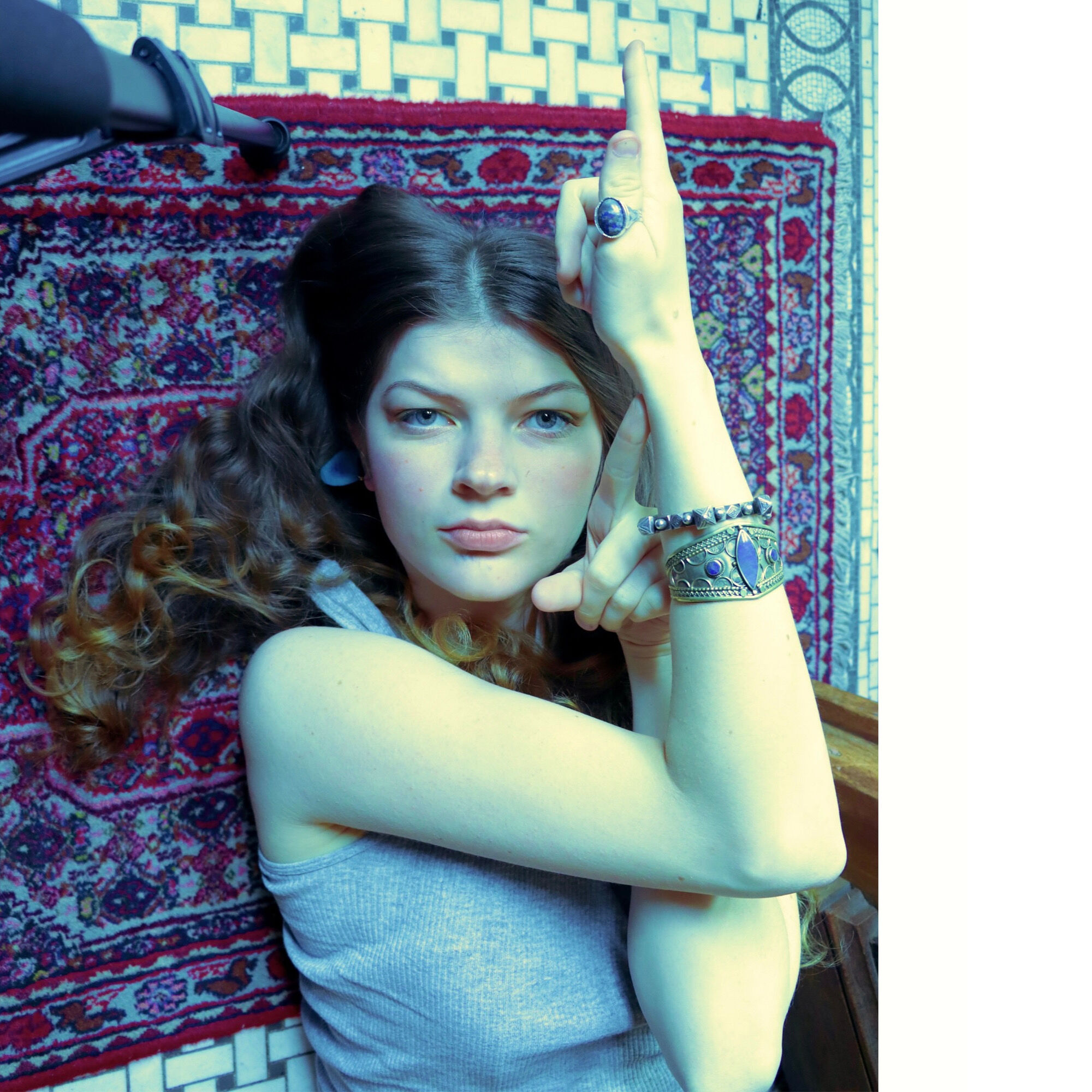
Photo by Avery Loftis
When Naomi Yanos was growing up, she went to a Greek Orthodox school. Although she disagrees with the Church’s principles, she said she enjoys feeling a spiritual presence in the Church. Trying to hold both safety and violence in her spirituality is ultimately the story behind her song “Joan.”
“I’m sort of thinking of the whole song as, like, passive betrayal,” Yanos said. I have my own feelings about religion, but it’s about the way that I feel like religion has maybe passively betrayed me. In some ways, I feel the same way about interpersonal situations.”
In “Joan,” the Oracle of Delphi, who was believed to speak divine prophecy to pilgrims, becomes one witchy woman in Yanos’ world.
While on stage, Naomi Yanos said that she imagines Joan of Arc coming out of a drug haze while being burned at the stake. Joan sees God sitting before her, unwilling and unable to help save her. Yanos said that making the song about religion was not her original intention, but she writes songs and shapes their meaning in fits and starts.
Sometimes, songs take Yanos years to write. For instance, there is a rendition of “In the Grass (From the Drive)” that was first published on SoundCloud in 2020. A slightly more polished version lives on the album.

Photo by Ava Baldassari.
Part of Yanos’s confidence comes from her time at New York University (NYU), the Clive Davis Institute. Once Yanos started at Clive Davis in 2022, she looked around and noticed everyone seemed type A. What collective calendar were they consulting that gave them this drive, the secrets to organizing their lives, and rocketing to the top of charts? She said she felt that she had to tap into more of her organization and commitment to her craft.
“I didn’t want to be left behind…I didn’t want to not have my career,” Yanos said.
Yanos laughed lightly when she explained that her dedication must have paid off — she graduated a year early, in May 2025.
The need to write and create has been nearly intrinsic for Naomi Yanos, though. She said the earliest she can remember was when she started writing at six years old, when her two older siblings were in a creative writing program. Yanos completed a musical writing module in the program, during which she wrote the first Yanos household hit, “Being Nice is Not Illegal.” Now, she said that she sits at the piano almost every day, fingering out melodies and letting whatever words come out of her mouth become hypothetical lyrics or simply a routine release of free verse.
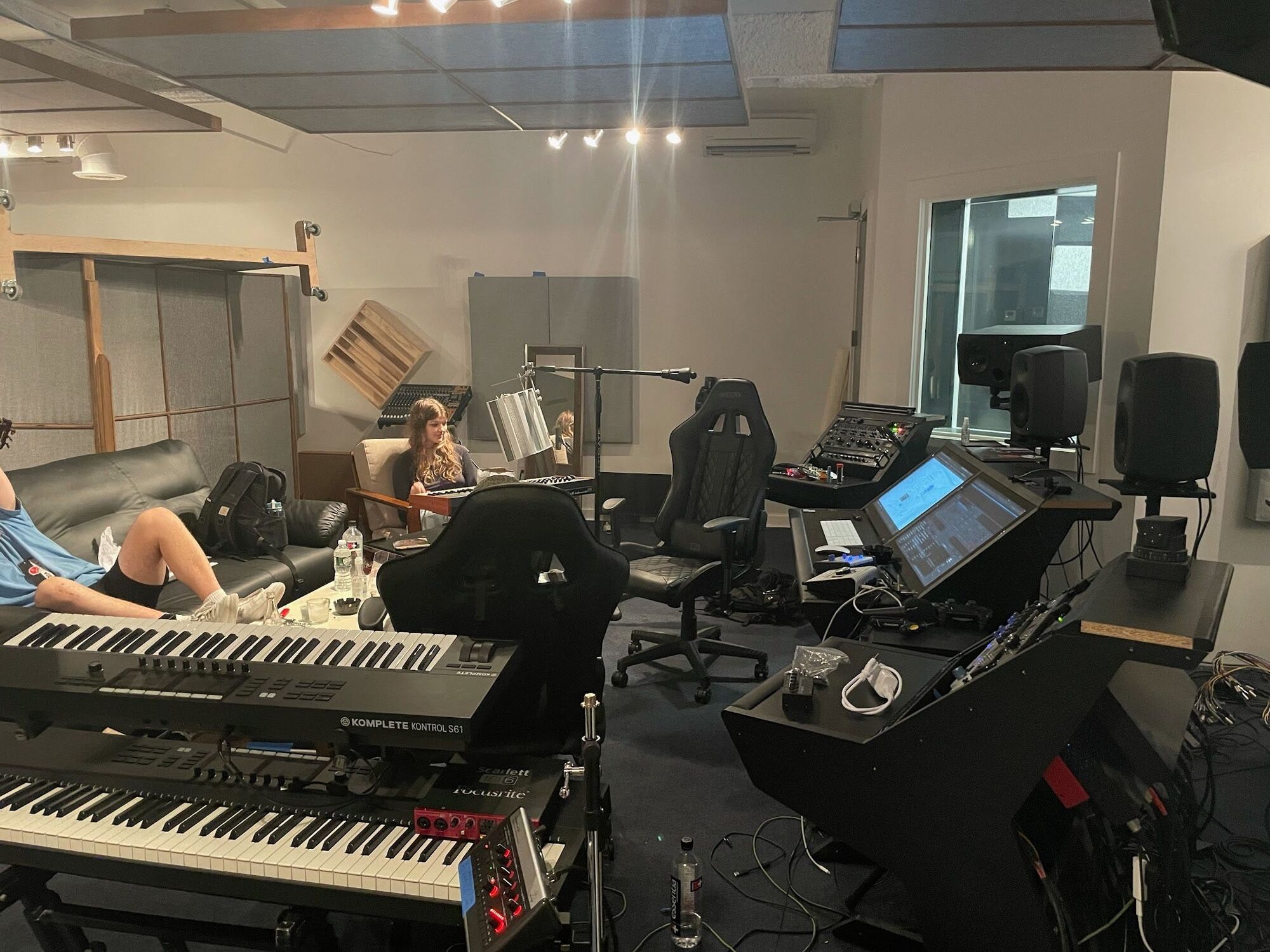
Photo courtesy of Naomi Yanos.
These are the versions of her songs that rarely anyone hears, as she prefers to write alone. But she does let her sister, Claudia, give her songs a first listen and will trustingly accept her feedback. When it comes to Naomi’s mom, she considers her to have a taste preference for pop over electronic, so she keeps that in mind when hearing her parents’ feedback.
No matter whose opinion she is listening to, though, Naomi Yanos implements all the feedback herself.
“It’s important to me that people produce their own music, to an extent, just because I think it’s part of putting yourself into it,” Yanos said. “You don’t have to produce everything you do; it’s not an expectation of mine, but I think, if it’s never been an impulse of yours, then I feel like usually there’s either an insecurity there or you just don’t want to.”
As a femme-presenting artist, she recognizes the difficulty of being overlooked by men in production. Yanos said that in high school, she visited a music studio and was the only woman in a room of about 60 men. The men were all set up to work in the studio after high school. Even at Clive Davis, Yanos said she noticed some male classmates would avoid working with anyone but their male counterparts.
Seeing these misogynistic patterns in the music production space, Yanos said she feels committed to producing her music and that, just maybe, it will help contribute to some changing tides.
“I think there is a lot more online visibility of people like posting, partially like their journeys with it, in some ways. So I think maybe that has helped people, by seeing a lot of women who are (producing), because I think that kind of helps shift your mentality from ‘oh can’t figure this out. To ‘Oh, there’s a lot of trial and error involved.’ Yanos said. “So I think that it’s empowering. And then also I think, it’s expensive to have other people produce your music, and if there is an opportunity where you feel like it’s possible for you to do it by yourself, like I feel like you would, but I don’t know if that’s just me.”

The “Into the Icebox” album cover. Photo by Ava Baldassari.
One of the most cited femme singer-songwriters and producers, Mitski, is Naomi Yanos’ inspiration for her blend of acoustic and electronic, while she points to Keylani as a guide to her freeverse lyrics.
Yanos tends to lean more toward the electronic, experimental roots she explored on her all-electronic EP, “Trying to Keep my Toes.” Until the second-to-last song on “Into the Icebox,” particularly striking because of its scratch vocals accompanied by an acoustic guitar fighting with a modular drone. She said she decided to keep the acoustic guitar on “Seasons of Man” because it felt more authentic to her.
“I had a confidence when I wrote that about who I was as a person,” Yanos said.
Embracing this confidence is part of what Naomi Yanos’s aspirations are for her burgeoning music career. She has already spoken of fulfilling fan interactions, on and offline, that prove her music is reaching an audience beyond her close friends and colleagues at Clive Davis. Yanos mentioned fans coming to her release show at Cassette in Ridgewood, and how listeners will compliment her visual songwriting via Instagram DM.
And most of what she wants people to take from “Into the Icebox” is to lean into both outside and inside connections.
“I guess I want people to feel a little exposed listening to this,” Yanos said. “I want people to listen to a lot of music. I want them to go outside, get out of the house, and go to shows…You’ll be so much happier if you’re just opening yourself up to new experiences. Have an open mind. I think I would want people to have an open mind when listening to this project, because I kind of take it all around.”
If listeners want to take Naomi Yanos’s advice, you can look out for her next show on her social media and her website. In the meantime, music lovers can stream “Into the Icebox” wherever you get your music.
Good Omen by Avery Loftis is a place where vulnerable thoughts live. In poetry, interviews, listicles, reviews, notes, audio, and more. Signs and symbols keep us moving.